Groundwork for safe, predictable, and masterful application
Chapter 2: The Technician’s Tool Kit
The Science of Your Station

A professional is only as good as their tools. While the aesthetic design of your implements might be superficial, the actual materials they are constructed from matter tremendously when interacting with high-performance chemistry. High-purity products will aggressively degrade the wrong materials! To handle DeEnterprises’ specialized and professional formulations safely and effectively at your station, you must use the proper equipment:
- The Dappen Dish: Always Use Ceramic or Glass ⚗️
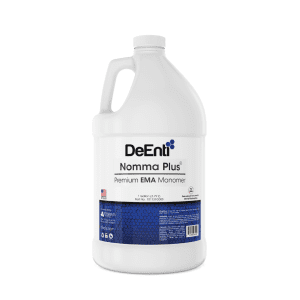
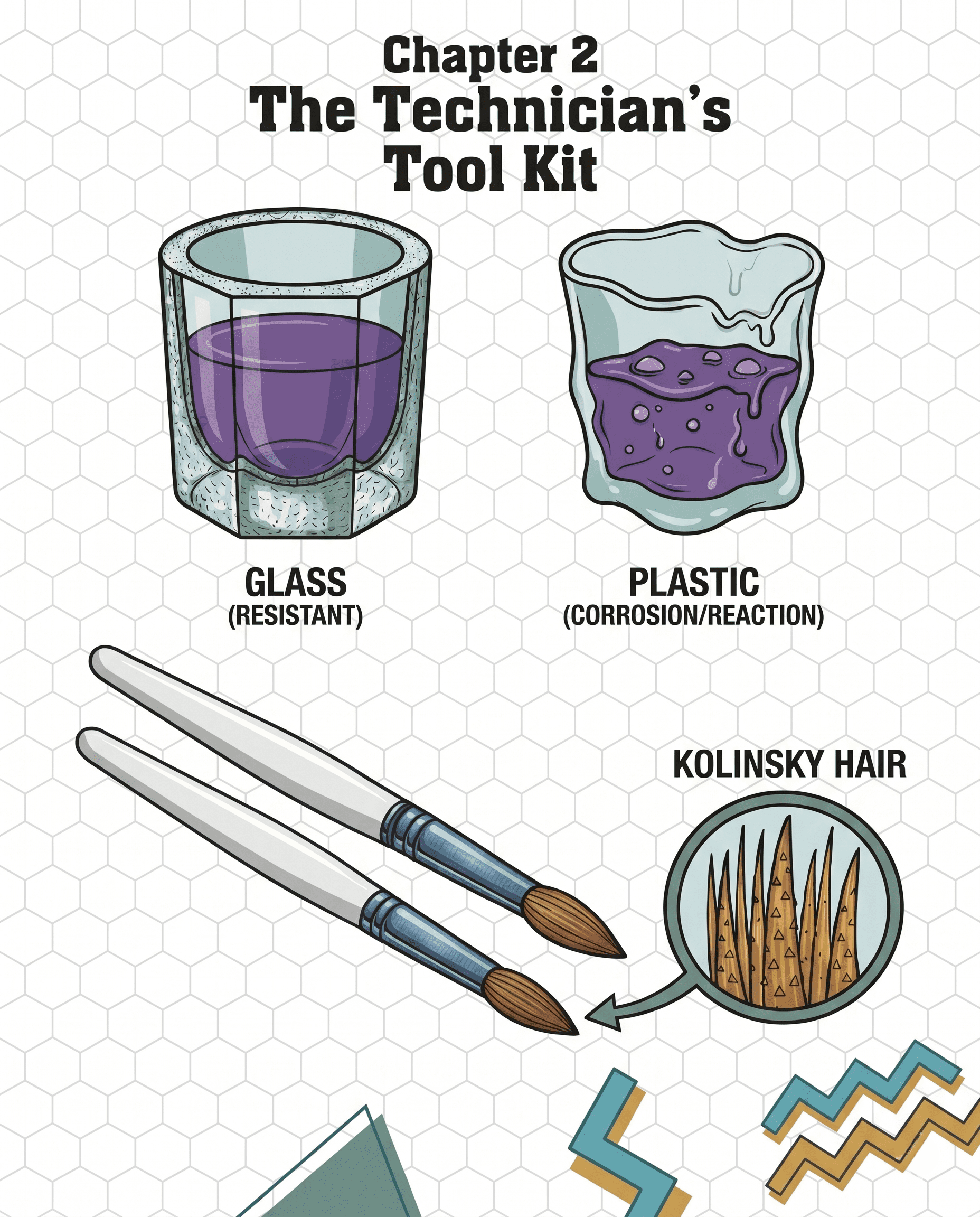
A dappen dish is a specific vessel designed to hold a small working quantity of monomer liquid. High-grade ceramic and glass are chemically inert, meaning they will not react with our Nomma Plus Monomer. Why does this matter? Many cheap plastic dishes are actually soluble in EMA monomer. If you use the wrong plastic, the liquid will literally dissolve the container from the inside out, contaminating your pure chemicals with melted plastic debris. This microscopic contamination is a primary, often-overlooked cause of cloudy, weak acrylic enhancements that lift. - The Brush: A 100% Kolinsky Hair Brush is Required 🖌️
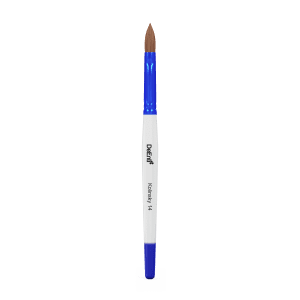
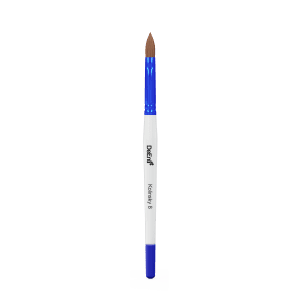
This isn’t about luxury; it’s about microscopic materials science. Professional Kolinsky (a specific species of weasel) hair has unique, microscopic scales along the entire shaft of each bristle. These tiny scales are essential: they act as a fluid reservoir, holding the exact correct amount of monomer liquid. When the wetted bristles touch the DeEnterprises polymer powder, the correct capillary action occurs to pick up a perfect bead. Synthetic fibers are too smooth to hold enough liquid, and cheaper squirrel hairs are too absorbent, both of which lead to failing liquid-to-powder ratios. - The Files: Standard Abrasives 🗂️
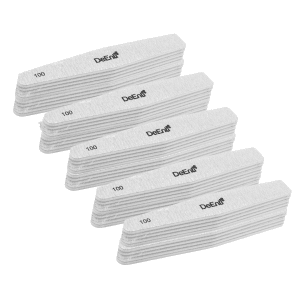
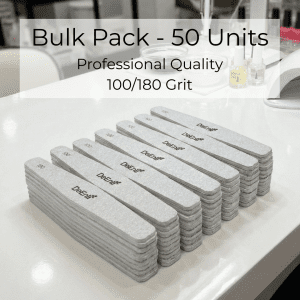
Physical shaping tools, or abrasives, are categorized by their “grit” number. The lower the grit number, the rougher and more aggressive the file. In acrylic chemistry, these files should be used only after the polymer has fully cured. Filing too early, while the product is still setting, physically disrupts the molecular cross-linking process we discussed in Chapter 1, which will permanently weaken the structural integrity of the final enhancement.
Pro Tip: You can HEAR when the acrylic is ready to file. A low-pitched tap is still semi-cured and not quite ready. A high-pitched tapping sound means your acrylic is cured and ready for shaping.